Building Worlds in Polymer Clay
How roses, ravens, dragons, and gothic towers emerge from polymer clay to become the sculpted 3D elements on our frames, boxes, and art books.
It starts with a block of polymer clay, a set of sculpting tools, and an image that won't leave your head. Four hours later, a dragon perches on a stack of forbidden tomes, or a baroque rose blooms from the corner of a dark frame. This is how Milena builds the worlds that live on the surface of each piece.
The Material
Polymer clay is a synthetic modelling material that remains soft and workable at room temperature, then hardens permanently when baked in a standard oven at around 130°C. Unlike natural clay, it doesn't require a kiln, doesn't shrink significantly during curing, and can be worked in extraordinarily fine detail.
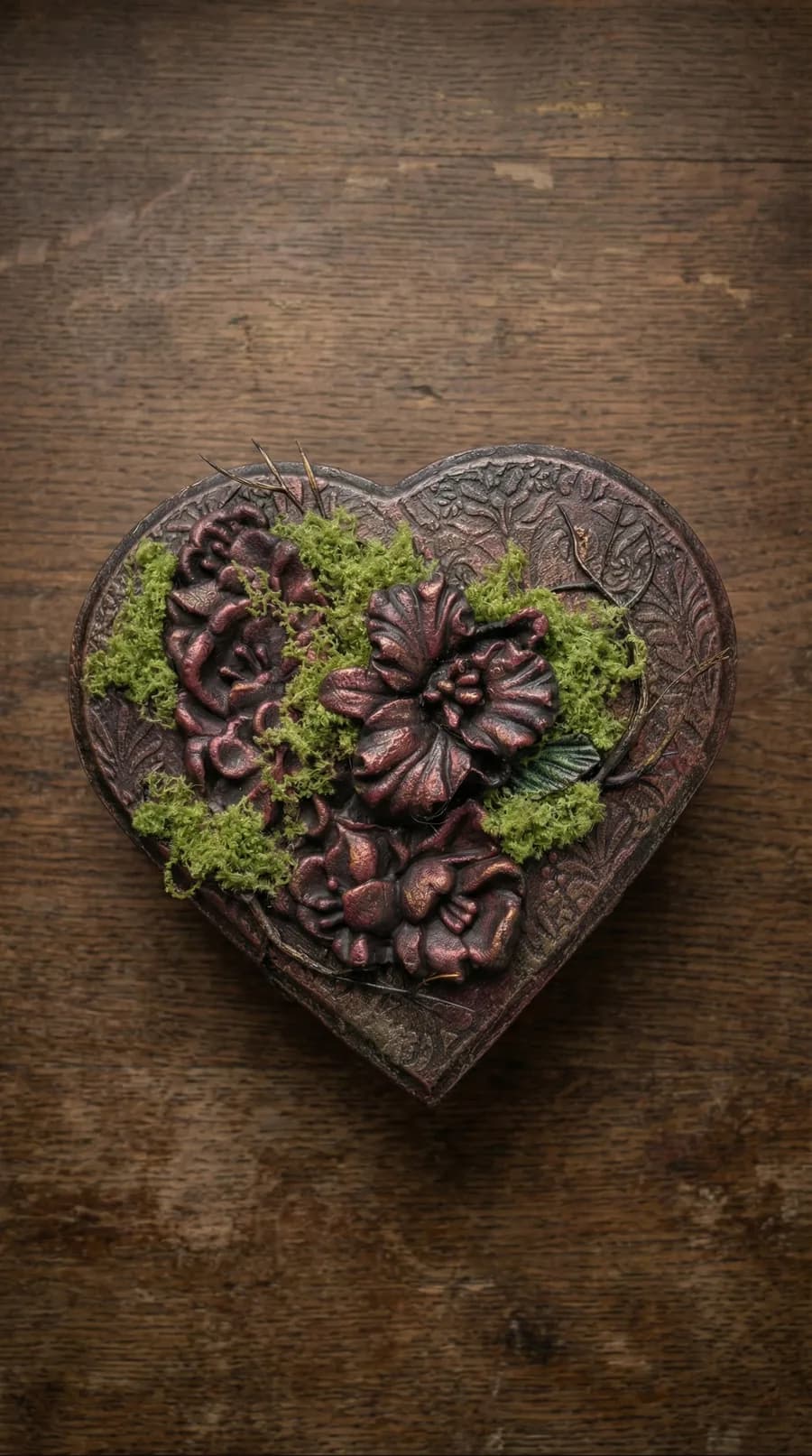
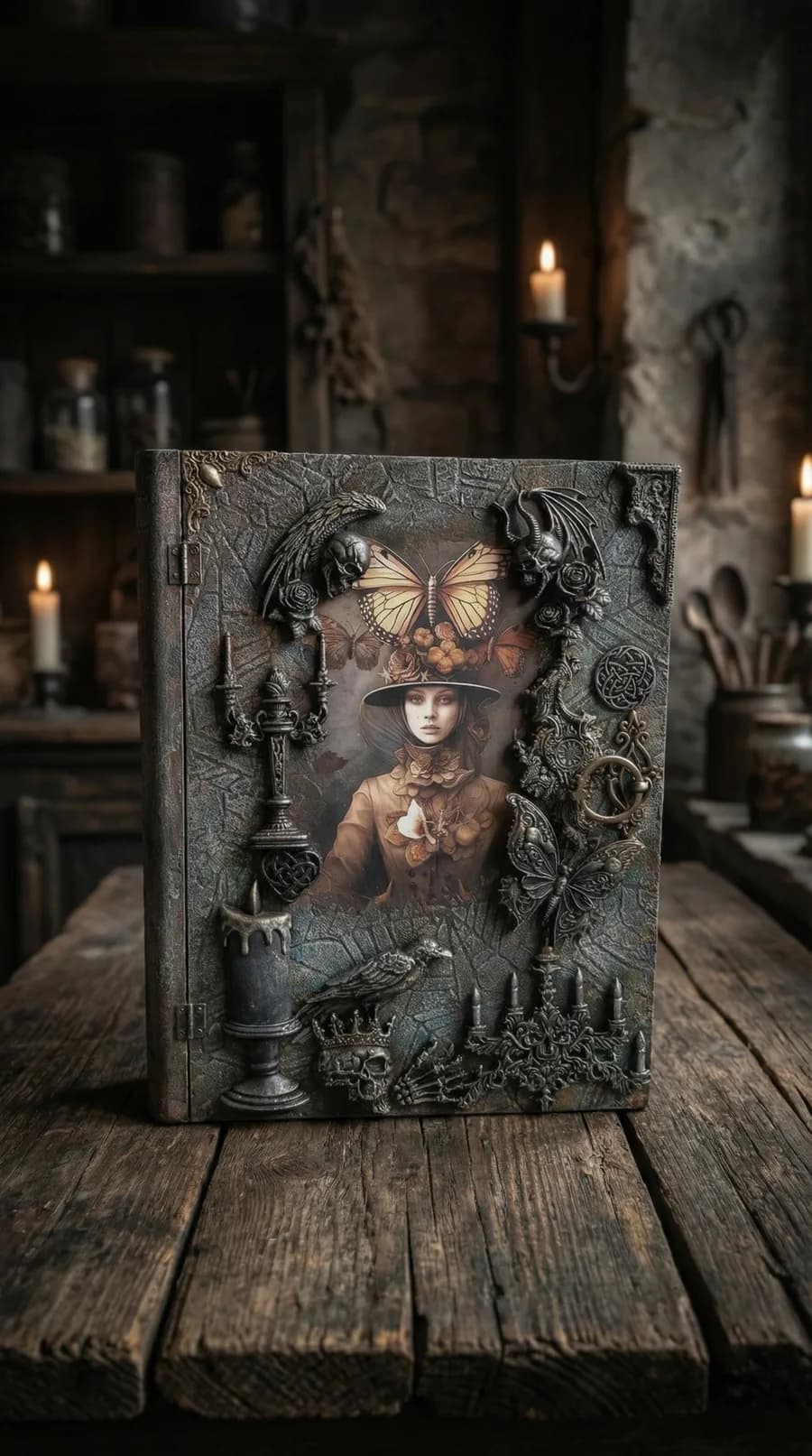
For the pieces at Mila Treasures Atelier, polymer clay is the primary sculpting medium for the 3D elements that transform a frame or box from ordinary to extraordinary. The roses on the Gothic Heart Trinket Box, the dragon on the Gothic Dragon Trinket Box, the enchantress and raven on the Gothic Enchantress Art Book — all begin as raw polymer clay.
The Process
Armature. For larger elements like the dragon or the enchantress figure, Milena starts with a wire or foil armature — a rough skeleton that gives the sculpture structural support and keeps it lightweight.
Rough shaping. The basic form is built up in layers. At this stage, proportions matter more than detail. A dragon's wing needs to sweep at the right angle. A rose needs the right number of petals to look natural without being botanical.
Detail work. This is where the magic happens — and where the hours disappear. Scales are pressed one by one into the dragon's body. Rose petals are thinned at the edges to catch light. The enchantress's flowing robes are textured with fabric-like folds. Sculpting tools, dental picks, and sometimes just fingertips create the textures.
Baking. Once the sculpting is complete, the piece goes into the oven. Temperature control is critical — too hot and the clay burns or bubbles; too cool and it remains brittle.
Finishing. After baking, each sculpted element is painted with multiple layers of acrylic and metallic paints. The aged bronze patina on the fairy tale frame, the teal verdigris on the dragon box, the iridescent green on the heart box — these finishes transform polymer clay into something that looks like it was forged from metal centuries ago.
Why Hand-Sculpted Matters
Resin casting from a mould can replicate a shape a thousand times. Hand sculpting cannot. Every dragon Milena sculpts has slightly different wing angles, different claw positions, a different tilt of the head. Every rose has petals that opened differently.
This is not inefficiency — it's the whole point. When you pick up a trinket box and run your finger over the sculpted lid, you're touching something that was shaped specifically for that piece. No mould. No machine. Just hands, tools, and time.
Mila Treasures Atelier
Handcrafted Dark Elegance