Handmade vs Mass-Produced: What You're Actually Paying For
A factory frame costs $30. A handmade one costs ten times that. Here's what accounts for the difference — and why it matters more than you think.
You can buy a "gothic mirror" from a large online retailer for $35. It arrives in two days. It looks fine. It looks exactly like the one your neighbour bought, and the one in the staged photo of a teenager's bedroom on a social media platform, and the 40,000 other units that rolled off the same production line in the same factory.
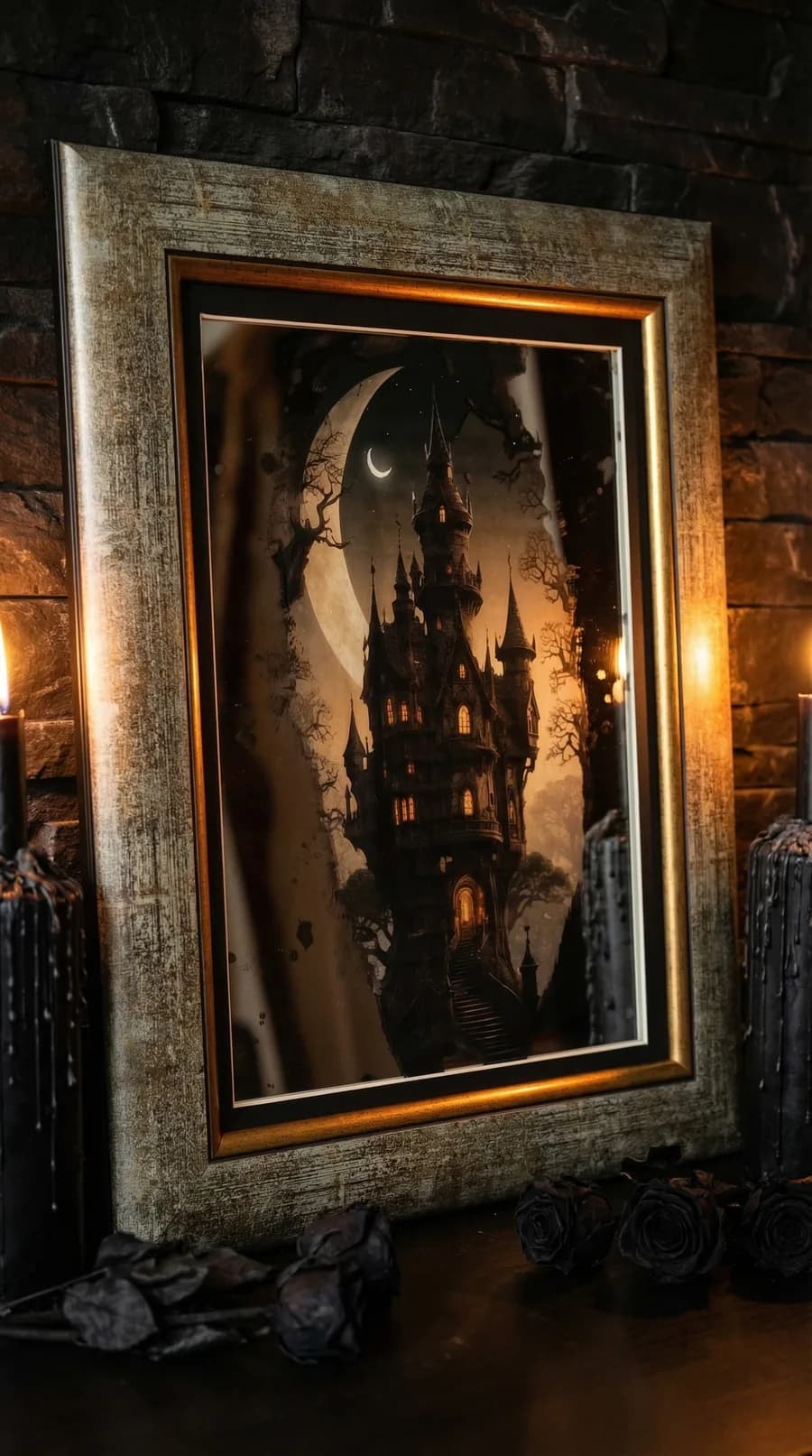
Or you can buy an églomisé mirror that took three days to make, where the glass was hand-scraped and the art was painted beneath the surface by a specific person in a specific workshop. It will never look exactly like any other mirror that exists. The price difference is real. So is the difference in what you're holding.
What Mass Production Actually Means
Mass-produced decor isn't inherently bad. It serves a purpose — it fills spaces affordably. But it's important to understand what you're buying:
Materials. Factory items use the cheapest materials that achieve the look: MDF instead of wood, printed decals instead of paint, resin casts from a single mould instead of original sculpture. The item is engineered for cost efficiency, not longevity.
Labour. A factory worker might handle hundreds of identical units per shift. The goal is speed and consistency. No piece receives individual attention because individual attention is the enemy of scale.
Design. Mass-produced gothic items are designed by committee to appeal to the broadest possible audience. The result is "gothic enough" without being challenging, unusual, or deeply personal. It's darkness with the edges sanded off.
What Handmade Actually Means
When Milena creates a piece at Mila Treasures Atelier, the process looks nothing like a production line:
Time. A single trinket box takes 15-20 hours. A framed art piece with sculpted 3D elements can take 30+. An églomisé mirror requires multiple days of scraping, painting, drying, and finishing. Time is the most expensive ingredient, and handmade work uses it generously.
Decisions. Every piece involves hundreds of micro-decisions that a factory never makes. How deep to scrape the mirror. How many petals on this particular rose. Whether the dragon's wing should curve left or right. These decisions make each piece singular.
Risk. Handmade work can fail. A mirror can crack during scraping. A polymer clay sculpture can break during baking. A patina finish can go wrong. The price of a handmade piece includes all the pieces that didn't survive the process.
Skill. Years of developed technique go into every piece. The ability to hand-scrape glass without shattering it, to sculpt polymer clay at a level of detail that reads as metal, to apply gold leaf so it ages naturally — these skills took years to build and cannot be automated.
The Longevity Question
Mass-produced decor is designed to be replaced. The trends change, the materials degrade, and in three years you're buying another one. Handmade pieces are designed to last — not just physically, but emotionally. A hand-sculpted dragon box doesn't become less interesting after a year. An églomisé mirror doesn't follow trends because it predates them by three centuries.
The most expensive decor is the kind you keep replacing. The most affordable is the kind you keep forever.
Shop the Pieces
Mila Treasures Atelier
Handcrafted Dark Elegance