Gothic Home Decor Trends 2026: What's Shifting
The gothic aesthetic is moving away from mass-produced darkness and toward handmade, story-driven pieces. Here's what's actually changing in 2026 — and what's staying.
Every year, design publications announce that "dark interiors are trending." Every year, they act surprised. But 2026 is different — not because gothic decor is suddenly popular (it never stopped being popular), but because what people want from it has changed.
The Shift Toward Handmade
The biggest trend in gothic home decor isn't a colour or a material — it's provenance. Buyers in 2026 are increasingly uninterested in mass-produced "gothic" items from large retailers. The skull candle holders and factory-stamped wall crosses that flooded the market a few years ago have lost their appeal. They look identical in every home. That's the opposite of what gothic decor is supposed to do.
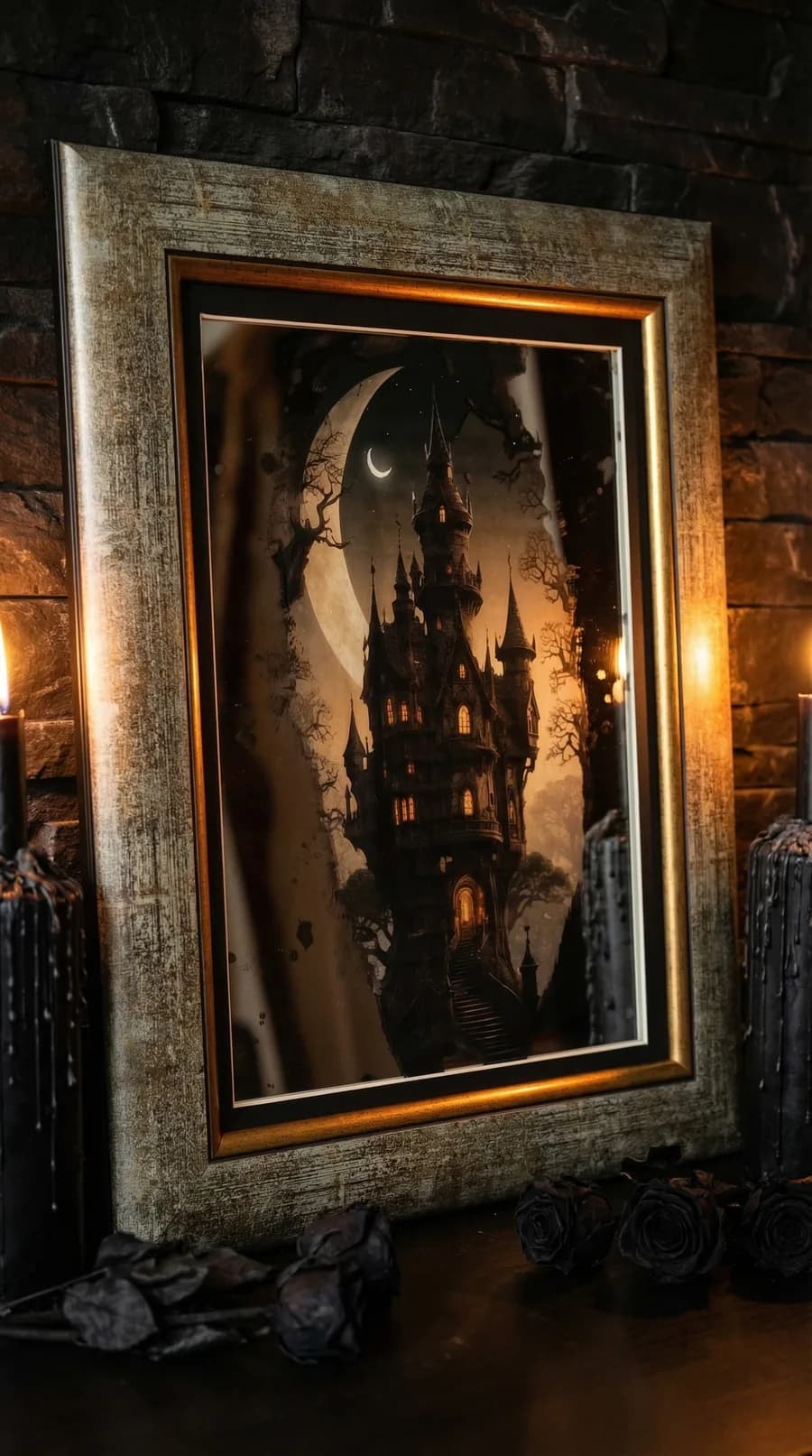
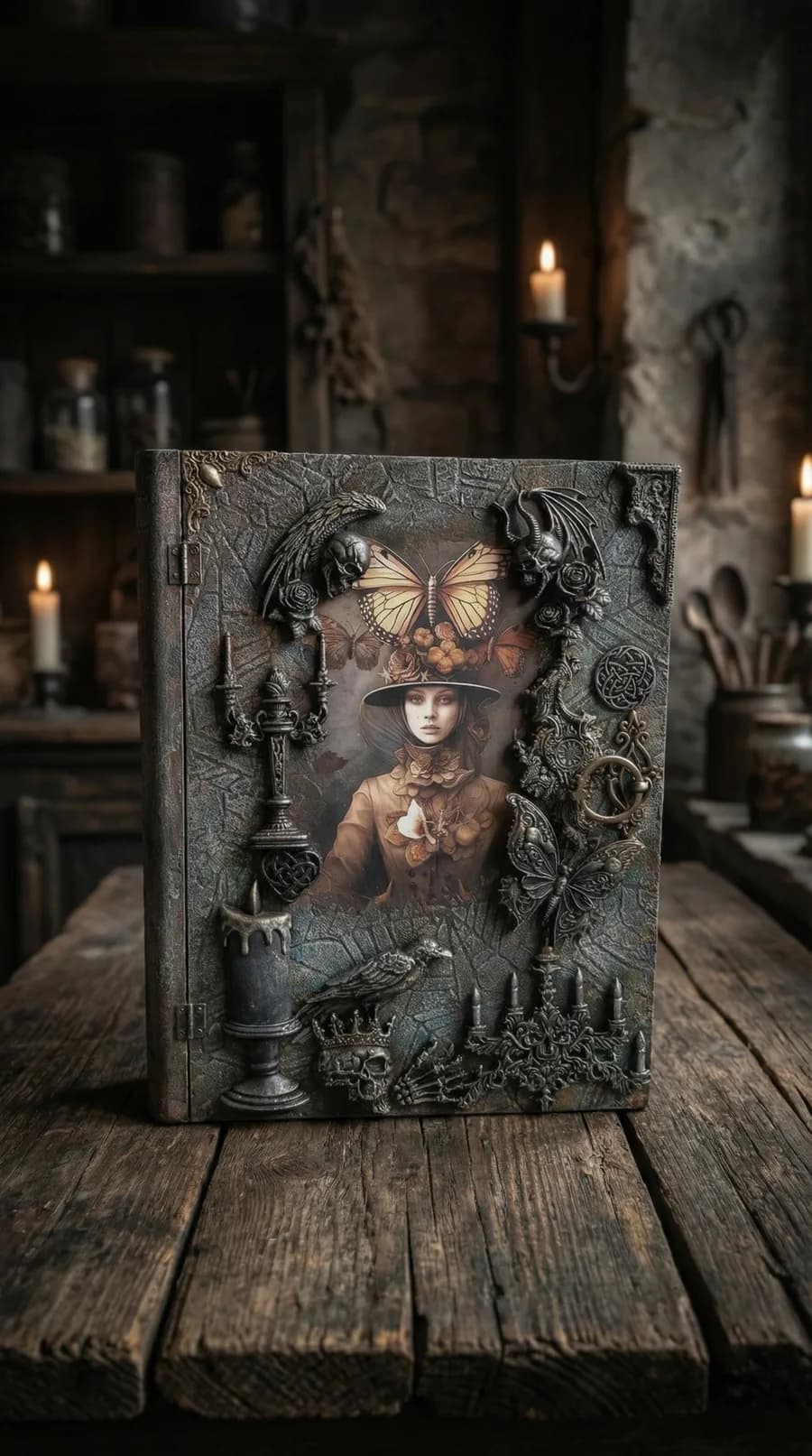
What's replacing them: one-of-a-kind handmade pieces with visible craftsmanship. Polymer clay sculptures where you can see the artist's fingerprints in the texture. Églomisé mirrors where the glass is hand-scraped, making each one unrepeatable. Pieces that have a story beyond "I found it on a big-box retailer's website."
Dark Academia Meets Gothic
The dark academia aesthetic — all old books, candlelight, and wood-panelled libraries — has been merging with traditional gothic decor since 2024. In 2026, that merger is complete. The result is spaces that feel learned and atmospheric rather than theatrical.
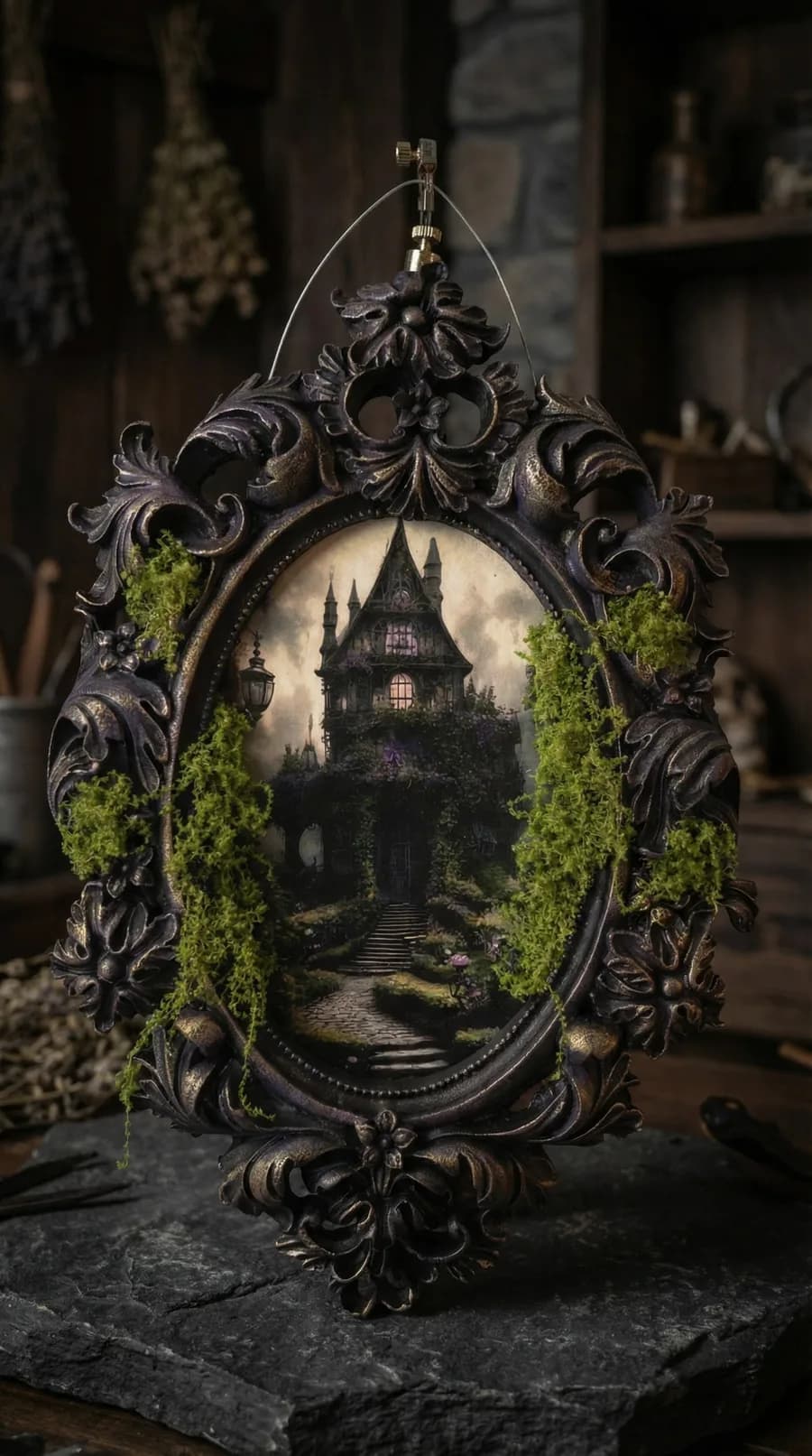
Think: a sculpted art book displayed on a reading desk alongside real volumes. A baroque castle frame above a shelf of leather-bound classics. An ornate trinket box holding wax seals and fountain pen nibs. The gothic elements serve the room rather than dominating it.
Églomisé Is Having a Moment
This 18th-century technique — painting behind glass on a mirror surface — has been quietly gaining attention as people discover what it actually looks like in person. Photographs don't capture it. The way an églomisé mirror shifts between reflection and painted scene depending on the light and viewing angle is something you have to experience.
In 2026, églomisé pieces are appearing in interior design features and curated home tours more frequently than at any point in the last decade. The technique's inherent uniqueness — no two pieces can be identical because the mirror fragments differently each time — makes it the antithesis of mass production.
Colour Palette: Gold and Burgundy Over Silver and Black
Pure black-and-silver gothic is giving way to warmer combinations. Antique gold, aged bronze, deep burgundy, forest green, and teal patinas are the dominant finishes in 2026. These colours feel older, richer, and more connected to historical gothic craft traditions.
The trend reflects a broader move away from "modern gothic" (clean lines, monochrome) and toward "romantic gothic" (ornate details, warm metallics, layered textures). Pieces with hand-applied gold leaf, verdigris patinas, and burgundy accents are leading this shift.
What's Not Changing
Some things remain constant. Dark walls are still the best backdrop for gothic art. Candlelight is still the ideal light source. And the fundamental appeal of gothic decor — beauty that acknowledges darkness, craft that values the handmade, art that tells a story — is as strong as ever. The trends are just catching up to what collectors have always known.
Shop the Pieces
Mila Treasures Atelier
Handcrafted Dark Elegance